

Backed by the Hungarian Research, Development and Innovation Office. Led by the Moholy-Nagy University of Art and Design (MOME) in Budapest, this multi-partner collaboration includes the University of Lisbon (Portugal), UCLA (USA), and HIT) Israel).
This international funding framework supports interdisciplinary research collaborations advancing inclusive and socially responsible technological innovation.
The project, titled “From Margins to Models: Creating a Platform for Culturally Aware Generative AI in Low-Resource Languages,” focuses on one of the major challenges in artificial intelligence: the lack of adequate representation of diverse languages and cultures in generative AI systems.
The research aims to develop culturally informed AI technologies, with a particular emphasis on low-resource languages such as Hebrew. To achieve this, the team will create new datasets, annotation methodologies, and training frameworks that enable AI systems to produce outputs that are both linguistically accurate and culturally sensitive.
The project is conducted in collaboration with international academic partners under the leadership of MOME, combining expertise from design, cultural studies, and computational sciences. Additionally, the initiative involves collaborating with museums and cultural institutions whose collections align with the research focus.
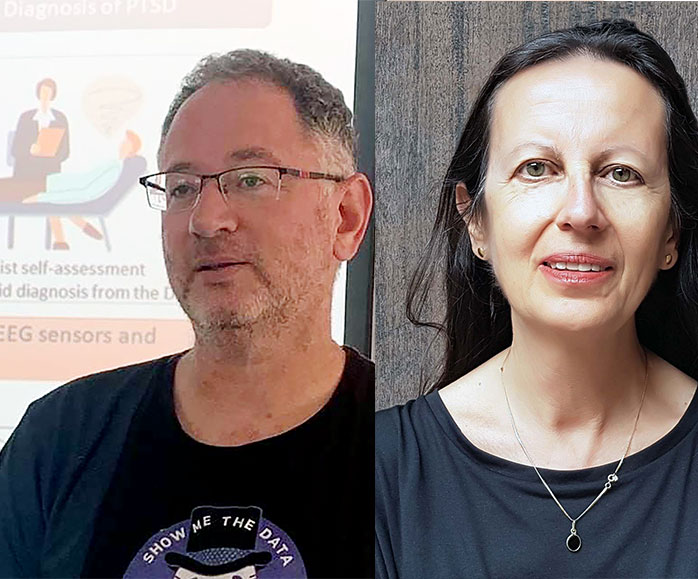
Dr. Yael Eylat Van Essen leads the cultural, theoretical, and ethical dimensions of the project, focusing on issues of representation, inclusivity, and cultural contextuality. Dr. Gaddi Blumrosen leads the technological development, including machine learning models and computational infrastructure.
The project is expected to contribute significantly to the development of more inclusive AI systems, while advancing global efforts to ensure that emerging technologies accurately reflect linguistic and cultural diversity.


