

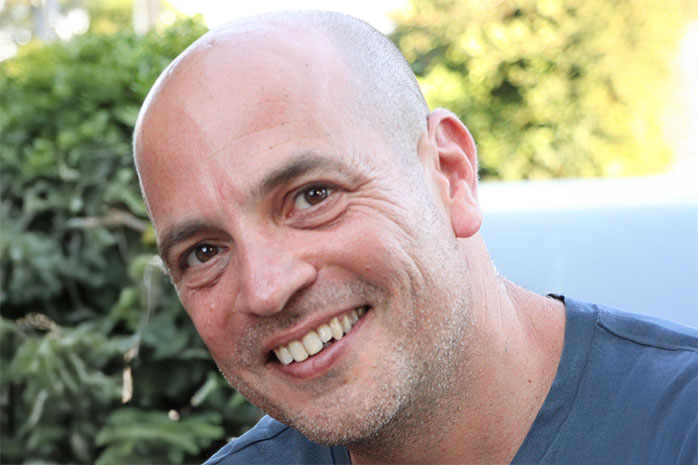
The lab, headed by Eran Katsav, a lecturer at the School of Computer Science and the Department of Digital Medical Technologies, focuses on developing applications designed for physicians and caregivers and on strengthening the connection between them. The lab is one of five independent labs established to provide a comprehensive response to the needs of the Faculty of Medical Technologies’ clinical partners, and as such, maintains close ties with one another. The labs operate under the responsibility of Dr. Hadas Lewy, Head of the Department of Digital Medical Technologies.
The lab’s flagship project is a platform called Proms++ (Patient Reported Outcomes), whose goal is to strengthen and streamline the connection between patient and physician through a generic medical questionnaire, the collection of various types of metrics, medication adjustments, cognitive tests, and more. The platform allows a clinic or clinical partner to build an application tailored to its specific needs by selecting and personalizing the relevant modules before sending them to patients and receiving responses instantly.
The first collaboration using the platform began in the neurology department at Beilinson Medical Center, among Parkinson’s patients, and later expanded to Soroka Medical Center, Beit Rivka, Herzfeld Hospital, and others. Importantly, beyond streamlining the physician-patient relationship, the goal is to gather information that enables the creation of smart models capable of predicting medical team decisions and supporting clinical decision-making.
The most recent collaboration took place with Sheba Medical Center, together with Prof. Gad Segal and Dr. Maayan Gilboa, using a similar platform for matching medical students, interns, and even residents with mentoring researchers, as part of Sheba’s Teaching Authority Academic Accelerator. The idea is to create a shared repository where researchers can upload their various studies and classify them by field of interest, while students can search, make contact, and ask targeted questions.
The result is a personalized platform connecting researchers and students or, as described at Sheba, a kind of “Tinder” for researchers, replacing information that had previously spread only by word of mouth. The platform, built through computer science student projects, also supports the research process going forward and allows team tasks to be defined and assigned even after the match is made.
To date, nearly a thousand users have registered on the system, and there are already plans to expand its use beyond the walls of Sheba Medical Center.
The connection between academia and healthcare organizations is one of the central emphases in the Technological Institute’s vision, which views the link between academia and industry as a key milestone one that makes a significant contribution to education and medical training within these organizations.


