

In an era when climate change has evolved from an abstract concept into a tangible daily reality, HIT Holon Institute of Technology has decided to act. The institution is announcing the establishment of CURe: The Center for Urban Climate Resilience, a multidisciplinary research framework focused on the interplay between climate, people, and the built environments in which they live.
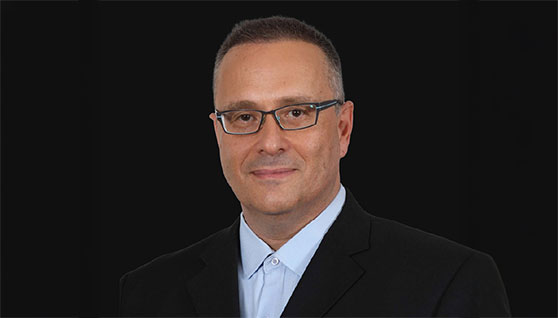
The Center will be led by Prof. Oded Potchter, a renowned climate expert who will head a team of researchers working across the fields of biometeorology, thermal comfort, climate-sensitive urban planning, and climate resilience. CURe will operate under the umbrella of HIT’s School of Multidisciplinary Studies, headed by Dr. Nava Shaked.
What sets CURe apart from other climate research bodies is not only its subject matter, but its approach. The Center has set itself the goal of bridging scientific knowledge and practical application. Decision-support tools, urban planning guidelines, and advanced monitoring technologies these are the areas CURe aims to pursue, alongside its academic publications.
“Our center is unique in the Israeli academic landscape because it does not limit itself to studying climate alone it focuses on translating scientific knowledge into technological and applied solutions with real-world impact,” explains Prof. Potchter. “What distinguishes CURe from others is the integration of three worlds that typically operate in isolation: climate science, technology, and urban space. CURe’s distinctive quality lies in its focus on the human being within the urban environment not merely how the climate is changing, but how that change affects health, behavior, thermal comfort, and quality of life. Unlike traditional research centers, we bring together field measurements, artificial intelligence, advanced simulations, and urban planning under one roof.”
At the heart of the Center will be a state-of-the-art applied laboratory that will collect and analyze climate and environmental data in real time : air pollution levels, heat loads, urban noise, and more. The laboratory will integrate GIS tools, smart sensing systems, computational models, and artificial intelligence to generate simulations that enable advance assessment of the environmental impact of planning and construction processes, before the first stone is laid.
Special emphasis will be placed on areas where environmental data is scarce, where the laboratory’s role in gathering high-quality information will be critical to informed decision-making.
An additional and original dimension of the Center’s work addresses the strategic implications of climate change: how competition over water and energy resources, climate migration, and geographic shifts affect relations between states and regional stability. This perspective combining climate science with geo-strategic analysis, makes CURe a unique think tank on issues of relevance to the Middle East.
HIT President Prof. Eduard Yakubov sees the establishment of the Center as an expression of the role the institution seeks to play in Israel’s technological and academic landscape: “The climate crisis is one of the most significant challenges of the 21st century, and it demands a combination of research excellence, technological innovation, and multidisciplinary thinking. The establishment of CURe reflects HIT’s commitment to leading applied research with genuine impact on society, economy, and quality of life. By connecting researchers, students, local authorities, and industry, the Center will serve as an engine for developing innovative solutions that address climate challenges and strengthen Israel’s urban and national resilience.”
Dr. Nava Shaked, Head of the School of Multidisciplinary Studies, points to the human dimension at the heart of the project: “The Center encompasses both a research institute and an applied laboratory, and it is being established as part of the School of Multidisciplinary Studies, whose diverse faculty spans all relevant fields of knowledge. We believe that in the age of AI, it is essential to place the human being at the center, even as technology surrounds us. Urban climate is a vital component of our lives today, and precisely because so many technologies now envelop us, we must think carefully about use, responsibility, and ethics. The integration of AI compels us to examine all of these dimensions more than ever before.”
Beyond its research activities, CURe will serve as a training ground for the next generation of professionals in the field: researchers, engineers, planners, and environmental experts who will leave equipped with both a solid scientific foundation and the ability to apply it. In doing so, HIT seeks not only to advance knowledge, but to shape the professions that will lead Israel toward climate resilience in the decades to come.