
Academy Manager, Torq | Independent Consultant in Learning Technologies |
B.A. in Instructional Technologies
I was 32 at the time and looking for a degree that could advance me professionally. To this day I remember the excitement before my admissions interview with the late Dean, Prof. Miki Ronen. I left the interview feeling like I had ‘come home’. I suddenly understood that this was, in fact, what I had been looking for my whole life. The years of study flew by for me. I think it was the relevance of what I learned to my day-to-day professional life that made the experience such a fascinating journey.”

Head of Learning Technologies Unit and Head of the Entrepreneurship in the AI Era Specialization at Mofet Institute |
B.A. in Instructional Technologies
“Throughout the program, I acquired practical tools that have become an inseparable part of my professional toolkit and that I use every single day. The courses were diverse and relevant, blending theory with practice while focusing on the most current topics in education and technology. The curriculum was tailored to the evolving needs of the world of education and training, and included exposure to advanced learning systems, development of digital tools to support learning, and implementation of innovative technologies. I also experienced a dynamic and supportive learning environment, characterized by high academic standards, encouragement of creative thinking, and collaboration with professional peers. Even today, years after graduating”.

Product Designer, AppsFlyer |
B.A. in Instructional Technologies
“Studying Instructional Technologies at HIT helped me become a more professional and insightful product designer. The program gave me tools and strategies that allowed me to see my role not just as an interface designer, but as an experienced designer who directly impacts users. My biggest challenge is not only finding solutions to every problem, but also simplifying things. The ability to take complex systems and distill the most essential elements from them is a skill I was fortunate to develop during my studies. The degree not only opened up the world of technology to me, but also gave me a deep understanding of how technology and knowledge work together to create effective learning experiences.”

VP Engineering and Product at Qualtero |
B.A. in Instructional Technologies
“When I started my degree, I was looking for something that combined UX design, programming, and design, three areas that were an integral part of my passion for creating practical solutions to people’s and organizations’ problems. The degree did not only give me a deep understanding of business processes and user needs, but also provided me with the tools to design, develop, and implement innovative solutions. During my studies, while working full-time, I developed a tool SMS-HIT that gave teachers and lecturers new capabilities for real-time audience interaction. Beyond my academic achievements, I feel the degree strengthened my ability to identify problems and create value for users which has become one of the most important qualities in my career.”

Head of Research Services in Education, EduCore, Weizmann Institute of Science |
B.A. in Instructional Technologies
“The methodologies I learned during my degree helped me develop the full range of skills required for managing Instructional technology projects. These, combined with hands-on experience in micro-processes development, production, and user interfaces gave me the tools needed to lead complex projects and bridge the worlds of technology, education, and academic research.”

Senior Product Manager at Wix
B.A. in Instructional Technologies
I feel that in every role I’ve held, I came well-prepared. Thanks to my studies which revolved around knowledge transfer and communication. Learning, training, conveying information occur in every human interaction, both within a team and your company’s customers. As an Instructional Technologies graduate, the tools and knowledge I gained were incredibly valuable throughout my career. The ability to bridge, break down, and simplify things when working with others helped me in many situations that weren’t necessarily classic training or learning development.”

Operations Manager, Israel Aerospace Industries
B.Sc. Industrial Engineering & Management | M.Sc. Technology Management, HIT |
Studying at HIT was highly practical and industry focused. Even during the degree, I felt the material never stayed theoretical it connected to real projects, teamwork, and simulations that mirrored the real world. The atmosphere was personal; lecturers knew you by name. I left with more than knowledge I left with professional confidence.
I entered the field at the end of my first year at HIT, and three years of experience before graduation made a real difference.
The transition into the tech industry was almost seamless. The degree gave me clarity: when I joined Israel Aerospace Industries, I knew exactly that I wanted to be at the intersection of engineering and management, between planning and execution.
At an Open Day in January 2019, I sat there in uniform as a soldier and heard a phrase I’ve carried with me ever since: “Start strong and keep building.” Industrial Engineering & Management doesn’t lock you into one track it opens a wide range of possibilities. And in the end, added value is what a person brings to a role: those who are driven by initiative and a growth mindset the sky is the limit.

Professional Services & Ops Team Lead at RISE
B.Sc. Learning Technologies
Studying at HIT was a highly hands-on experience courses that force you to build things, not just talk about them. There’s real room for personal initiative and project-based work. Students who show up actively engaged get far more out of it than those who just come to “pass courses.” Our final project, Sensei Adventures an educational VR game we built from scratch — was the moment I fully connected instructional content, user experience, and cutting-edge technology in a single creation.
In my case, there was no sharp transition into the job market, because I was already working during my studies. What the degree did do was give depth and professional vocabulary to what I had already been doing intuitively content design, pedagogical thinking, user experience. Things that had worked for me instinctively became structured and grounded. That strengthened my professional confidence and the quality of my decision-making significantly.
Entering the Job market was built on my ability to bridge business and technology and to understand complex systems. My advice: find out how much you build in any degree you’re considering. Ask what projects students work on, check the industry connections, and talk to alumni not just faculty.

Medical Data Analyst, HEAL Lab – HIT
B.Sc. Digital Technologies in Medicine |
Our program is small compared to others, and that gave me a nearly family-like classroom experience personal familiarity with lecturers, and I knew everyone in my cohort by name. That’s not something you can take for granted in an academic degree, and it enabled genuine collaborative learning and a real sense of closeness. The program director was always available, always trying to help navigate challenges along the way and I never took that for granted.
My own transition into the workforce was smooth, because I began working at the institute under one of my professors. There was complete alignment between what he expected me to know and what I knew. I felt responsibility and independence from day one and I’m genuinely happy with where I landed.
One important note: graduates of our program need to be prepared to do their own PR, since most employers aren’t yet familiar with it. But those who work hard throughout the degree, ask questions, and seek out opportunities the opportunity finds them. I’m living proof of that.

Software Engineer at Amazon | Previously: Intel, Mobileye, Apple
B.Sc. Electrical Engineering
My experience studying at HIT was excellent. One of the institute’s greatest strengths is that it attracts a mature student body veterans who bring practical knowledge, and people who are simply driven to succeed. The flexible schedule allows students to work while studying, and when you encounter real engineering challenges during the day and then sit in a lecture that evening explaining the theory behind them it makes the entire experience far more meaningful.
I landed my job at Intel thanks to HIT’s alumni network. A fellow graduate posted a student position before it went public, because he wanted to give HIT alumni a first shot. It’s not favoritism it’s opportunity. When I later recruited for my own team, I felt the same drive to give back, and one of the HIT students I brought on is now truly thriving. The bottom line: there are HIT graduates throughout the industry today, and we are all ambassadors for the next generation.
The transition into the industry came naturally, because I had been working since my first year of studies. The experience a student builds alongside their degree is a genuine advantage. I combined theoretical knowledge with hands-on practice and that combination is what opens doors.

Senior R&D Manager at Genesys
B.Sc. Computer Science |
Throughout my studies, I felt I was at a genuine, professional, and serious academic institution and at the same time, a nurturing environment. The faculty had a true open-door policy; I could always reach out and get a response. Beyond the academics, I made lifelong friends who are still my closest people today.
We took many practical courses during the degree, and that made a real difference. Students who choose electives aligned with what they want to do professionally are doing themselves a huge favor. That’s exactly what I did: I took a mobile development course, and shortly after graduated I started working in that field it felt like a perfect fit. I developed a way of thinking. That’s the foundation a career is built on.
The transition into the tech industry was relatively smooth. The practical coursework throughout the degree prepared us well, and students who align their electives with their professional goals make that transition even easier.

B.Des. degree in Design
“Studying in the Industrial Design department is genuine, accurate preparation for life after graduation. I gained tools and built connections that allow me to move forward with much greater clarity.”

Electrical and Electronics Engineering
“The flexible track at the institute allows for full control over the schedule, thus allowing for work, and indeed I worked from the beginning of my studies. Working at the same time provided the practical tools that you don’t usually get in academia.”
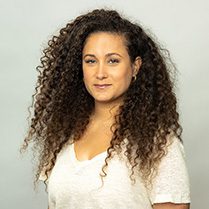
Learning and Training Manager at Harel Insurance |
M.A. in Instructional Technologies
“I chose to pursue my master’s degree at HIT because it focuses on organizational learning and the business world. The degree helped me speak the organizational language, which I didn’t have before. When I started working at Harel, it didn’t feel unfamiliar even though I came from an education background and that was thanks to my studies.”

Senior AI Innovation Product Manager at Nanit |
M.Sc. in Electrical and Electronics Engineering
“I chose to pursue my master’s degree at HIT because of the faculty’s strong ties to the industry. They are actively involved in the industry, understand what’s needed out there, and enable students to learn things that address real market needs. I also chose it because of the flexible track, which allowed me to study for my master’s while working full-time.”

Pharmacist
“The combination of technology and pharmaceutics has always attracted me. There are processes in the world of medicine and the world of pharmacy that the use of technology will allow them to provide solutions to issues that are difficult to solve today”

Product Manager at Omnisys
B.Sc. in Industrial Engineering and Management
“The curriculum is oriented toward the software and data world and toward real market needs. I was impressed by the high professional level of the lecturers and their genuine care for our success they always went out of their way to support students without compromising on teaching quality or academic standards. The degree gave me the big picture of the field, and throughout my studies I was also exposed to practices I use in my day-to-day work.”

Studio Owner in Milan and Lecturer at the Institute |
B.Des. in Design
“During my undergraduate studies at the Institute, I gained tools that simply cannot be learned in any other setting. Even though there’s always a gap between academia and practice, these tools continue to help me to this day , both in my work and in my teaching. The way of thinking we developed during the degree remains deeply meaningful.”

Founder and CEO of Novia 101 |
B.Sc. in Computer Science
“I began my studies as an IDF captain, and the flexible track allowed me to continue working in my unit full-time while completing my degree in three years alongside my entire cohort. That’s one of the most significant advantages over other academic institutions.”